NIGERIA UNVEILS $2 BILLION ENERGY TRANSITION FUND AT ABU DHABI SUSTAINABILITY WEEK 2026
19 January, 2026
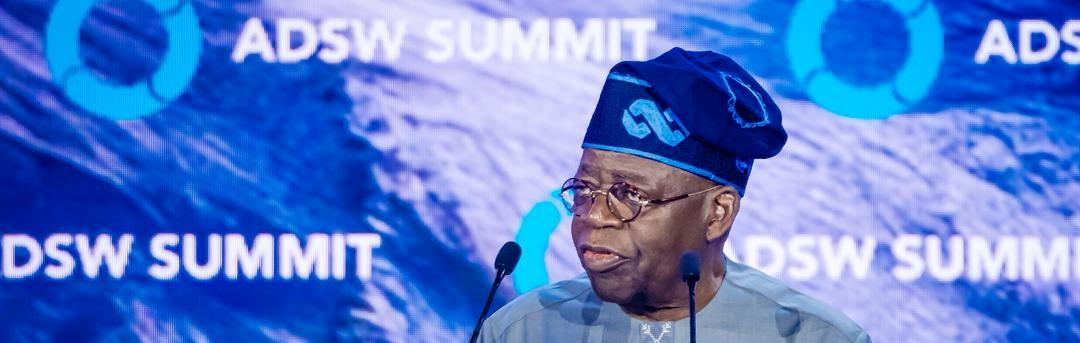
Nigeria made bold strategic announcements and clinched key agreements on the sidelines of the 2026 Abu Dhabi Sustainability Week (ADSW).

19 January, 2026
Nigeria made bold strategic announcements and clinched key agreements on the sidelines of the 2026 Abu Dhabi Sustainability Week (ADSW).
At the summit, President Bola Ahmed Tinubu unveiled Nigeria’s plan to establish a $2 billion National Climate Change Fund aimed at accelerating the country’s energy transition, financing low-emission infrastructure, renewable energy projects, and climate resilience initiatives. The fund will be central to financing projects that cut emissions, expand access to clean power, and fortify adaptation solutions across Nigeria’s economy.
Complementing this initiative, Nigeria also launched a Climate Investment Platform designed to mobilize $500 million for climate-resilient infrastructure such as flood control systems, resilient transport networks, and urban adaptation projects. This platform is structured to attract long-term capital from institutional investors, pension funds, and insurers, aligning climate objectives with economic growth.
To attract even larger flows of green finance, President Tinubu introduced the Climate and Green Industrialization Investment Playbook, a policy and regulatory framework intended to help unlock between $25 billion and $30 billion annually in climate finance. The playbook provides clarity on project pipelines, regulatory environments, risk allocation, and expected returns all to boost investor confidence and direction in Nigeria’s sustainable development economy.
Addressing summit participants, Tinubu emphasized that Nigeria sees climate action “not as a burden but as an economic opportunity,” linking energy access, industrial growth, job creation and social inclusion to climate mitigation efforts. He reiterated Nigeria’s Energy Transition Plan, which targets net-zero emissions by 2060 while expanding nationwide electricity access.
Historic Bilateral Agreements and Strategic Cooperation
On the sidelines of ADSW, Nigeria and the United Arab Emirates (UAE) signed a Comprehensive Economic Partnership Agreement (CEPA) designed to deepen economic cooperation, boost bilateral trade and investment, and promote technology transfer across key sectors including energy, infrastructure, renewable technologies, agriculture and digital trade. The agreement also paves the way for a joint INVESTOPIA forum, scheduled to take place in Lagos in February, aimed at attracting global investors to Nigeria.
The CEPA agreement witnessed by President Tinubu and UAE leadership, marks a significant step in strengthening Nigeria-UAE relations and underscores ADSW’s role as a catalyst for business and climate diplomacy.
Investor Confidence and Green Finance Momentum
Nigeria’s announcements at ADSW were backed by strong market signals. Investor appetite for green instruments was highlighted by oversubscription to sovereign and state green bonds issued in 2025, with demand significantly outstripping supply, a clear signal of confidence in Nigeria’s climate finance trajectory.
President Tinubu and his delegation returned to Nigeria following the summit with a strengthened portfolio of commitments and partnerships that place the country at the intersection of climate action, investment opportunity, and sustainable development pathways.
SPE Lagos Section 61: Leading the way in oil and gas excellence, innovation, and sustainable energy solutions since 1973.
Copyright © SPE Lagos, 2026. All rights reserved.